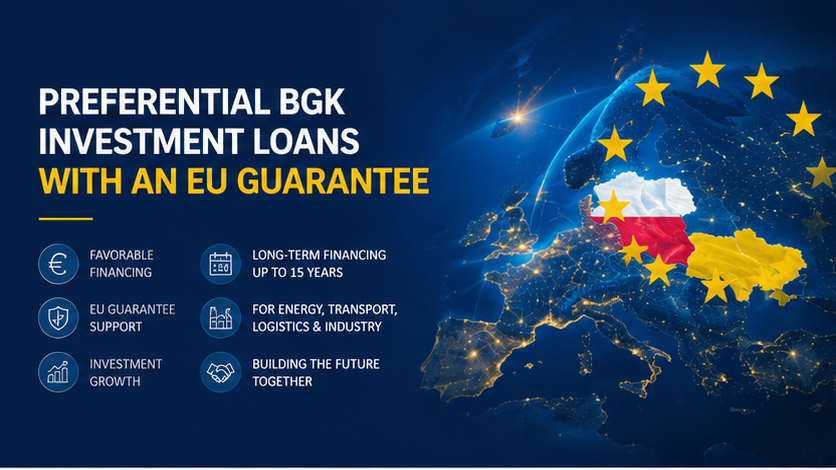
The webinar was organised by the Polish-Ukrainian Chamber of Commerce in cooperation with Bank Gospodarstwa Krajowego (BGK) as part of the “Ukraine Facility Club” initiative. The event focused on financial instruments designed to support the reconstruction of Ukraine and presented the role of BGK and the European Commission in implementing these mechanisms.
At the beginning of the meeting, Dariusz Szymczycha, First Vice President of the Polish-Ukrainian Chamber of Commerce, explained the significance of the event and the recent legal and institutional developments that made such cooperation possible. He emphasised that amendments to the Polish development aid legislation adopted in 2025 enabled BGK to finance development and reconstruction projects in Ukraine. He also highlighted the importance of the agreement ratified between Poland and Ukraine regarding BGK’s operational status in Ukraine, as well as the agreement signed between BGK and the European Commission concerning participation in the second pillar of the Ukraine Facility programme.
The main speaker of the webinar was Agnieszka Falkowska, Director of the Department of International Development Instruments at BGK. She presented the bank’s current and planned financial support mechanisms dedicated to Ukraine. She noted that BGK, as Poland’s national development bank with over one hundred years of history, has already been actively supporting Ukraine since the beginning of the Russian invasion. In cooperation with Ukrainian banks such as Kredobank and PrivatBank, BGK introduced risk-sharing instruments that allowed Ukrainian businesses to continue accessing financing even in regions directly affected by military operations.
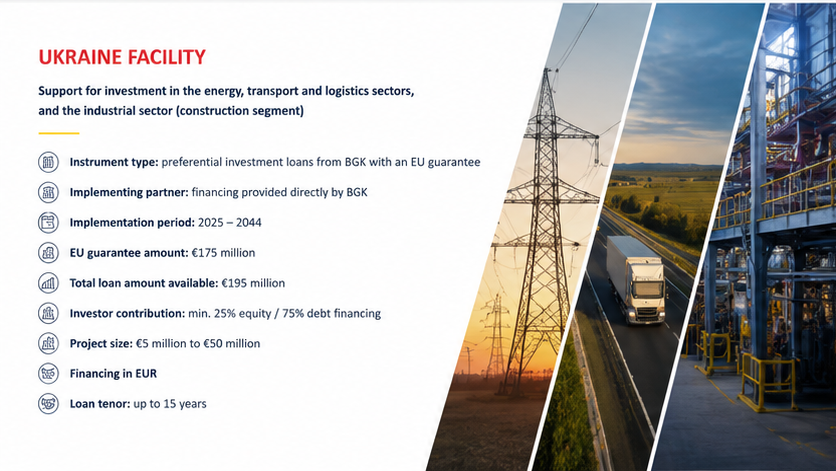
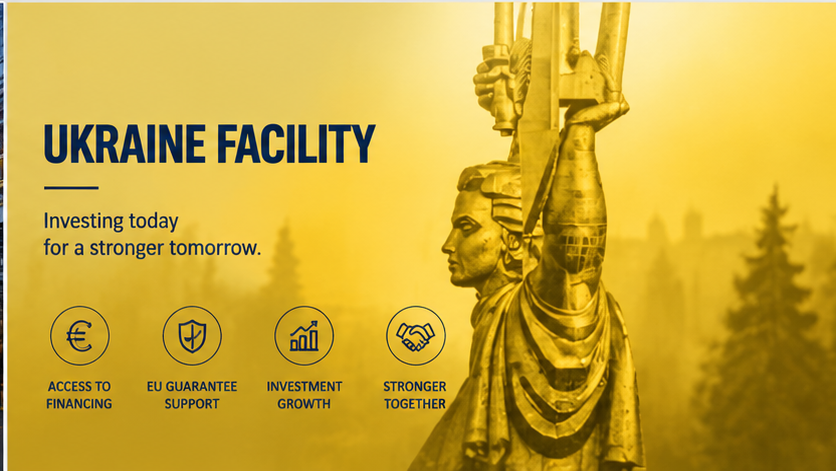
A major part of the webinar was devoted to the investment financing instrument created under the second pillar of the Ukraine Facility programme. BGK secured approximately EUR 350 million in guarantees from the European Commission, together with around EUR 80 million in grants and technical assistance funds. These resources are intended to support long-term investment loans for projects implemented in Ukraine. The programme is aimed at investment projects ranging from EUR 5 million to EUR 50 million, with repayment periods of up to 15 years. Financing will be available mainly for projects in the energy, transport, logistics, industrial production, and dual-use sectors. Particular attention was given to industrial and infrastructure-related investments that may contribute directly to Ukraine’s economic recovery and resilience during wartime.
An important condition discussed during the webinar was that the borrower must be a legal entity registered in Ukraine. However, BGK clearly expressed its preference for projects involving cooperation with Polish businesses, for example through Polish contractors, suppliers, investors, or joint ventures. Nevertheless, participation of a Polish partner is not a formal requirement for obtaining financing. The speakers stressed that the financing process would be highly individualised. Unlike standard banking products, every investment project would be assessed separately on the basis of detailed business plans, financial models, and supporting documentation. BGK also emphasized the importance of technical assistance financed by European Commission funds. These non-repayable resources may cover the costs of legal advisers, technical experts, market analyses, and project preparation services, reducing the burden on investors.
The webinar also addressed the expected cost of financing. Thanks to the European Commission guarantees covering up to 90% of the risk, BGK is able to offer significantly more favorable loan conditions than would normally be possible in a country affected by war. Interest rates are expected to remain well below the levels typically associated with high-risk wartime investments.
Another major topic concerned support for Ukrainian municipalities and local governments. BGK is currently negotiating an additional programme dedicated to small and medium-sized Ukrainian cities with populations of up to 250,000 inhabitants. The programme is intended to finance municipal infrastructure projects such as district heating systems, water supply networks, public transport, and other public utility investments. One particularly important aspect of this municipal support programme is the availability of grant components. Up to 30% of eligible investment costs may be covered through non-repayable EU funding. Additional technical assistance will also finance project preparation, technical documentation, procurement procedures, and investment monitoring.
During the Q&A session, participants asked about eligibility criteria, financing conditions, security requirements, and wartime risk protection. One notable issue discussed was the possibility of including special clauses in loan agreements that would release borrowers from repayment obligations if financed facilities were destroyed as a direct result of military attacks.
Representatives of PUBIH also participated in the webinar, actively exploring opportunities for cooperation and financing of projects related to the reconstruction of Ukraine and the development of international partnerships.
Towards the end of the webinar, the speakers introduced plans for additional financial instruments currently under preparation. Besides loans, BGK and several European development banks are working on the creation of an investment fund that would provide equity financing for projects in Ukraine. The initiative involves institutions such as KfW, CDP, the European Investment Bank, and the European Commission. The fund is expected to begin operating in the second half of the year and is intended to complement debt financing mechanisms.
Overall, the webinar demonstrated the growing role of Poland and BGK in coordinating international financial support for Ukraine’s reconstruction. The presented programmes are designed not only to stimulate economic recovery, but also to encourage long-term investment, strengthen local infrastructure, and support Ukrainian businesses and municipalities during wartime conditions. The meeting also had a practical dimension, providing participants with guidance on how to prepare projects and apply for future financing opportunities.